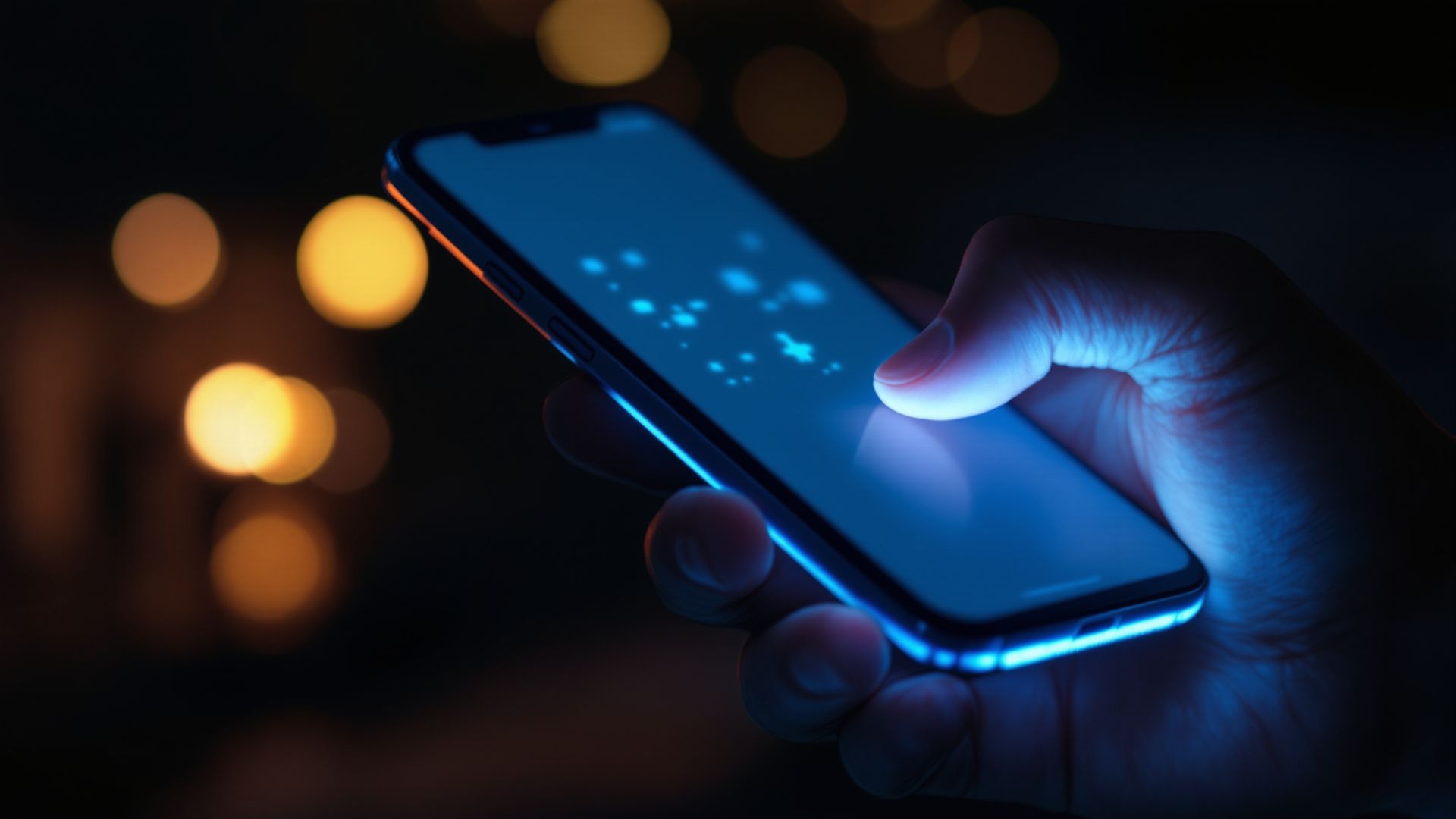
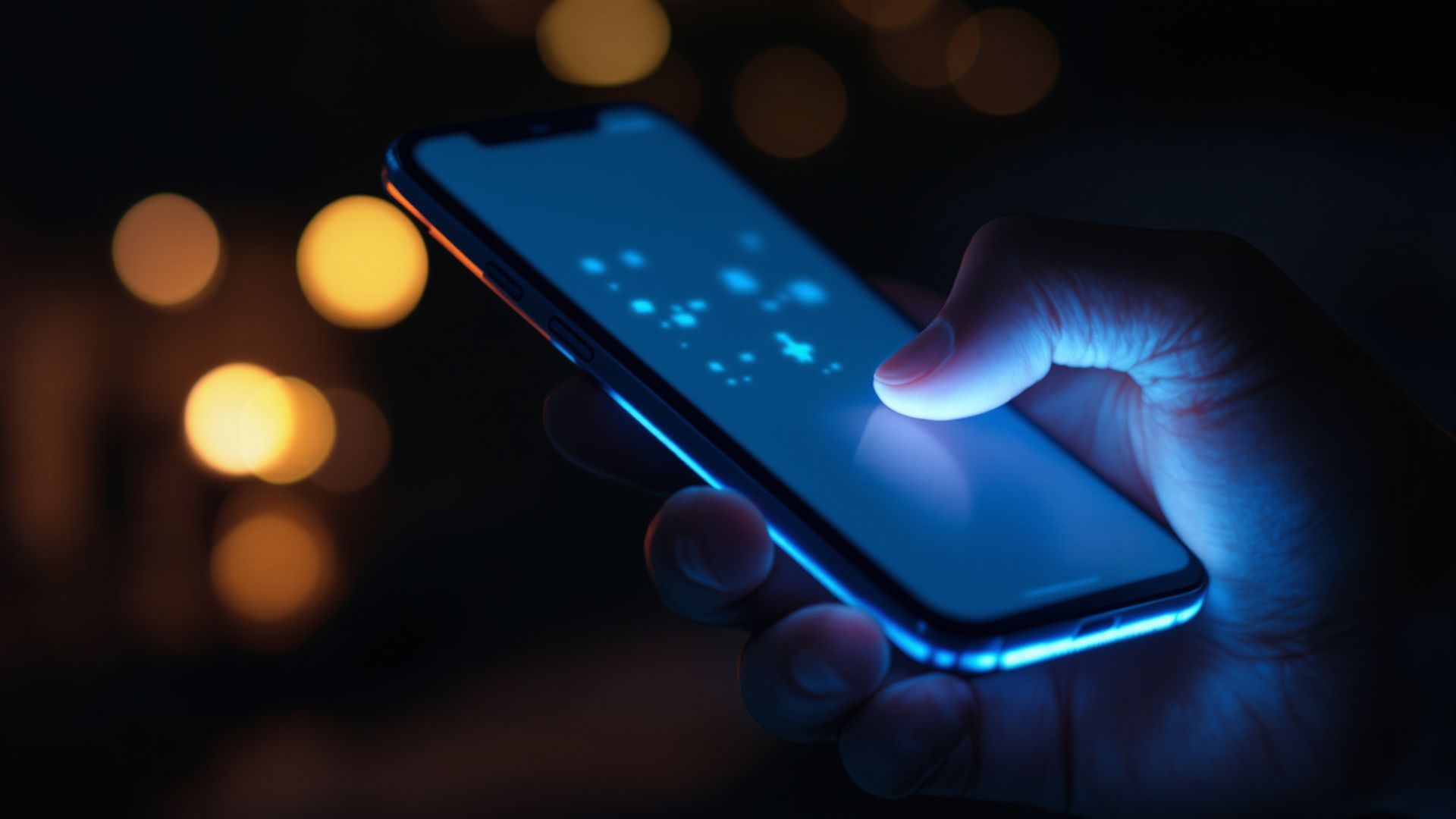
Picture this: You're scrolling through your phone, focused on a friend's post. You don't notice the soft blue glow at the edge of your screen. Or do you?
Your brain just processed that subtle brand cue—without you even realizing it. Welcome to the fascinating world of peripheral vision messaging, where the real marketing magic happens just outside your direct gaze.
Here's something wild: While you're reading these words, your brain is simultaneously processing information from an area 40 times larger than what you're focusing on. It's like having a security system that never sleeps—constantly scanning, evaluating, and influencing your decisions.
And smart marketers? They've cracked the code.
Traditional advertising is like that person at a party who talks too loud and stands too close. We've all learned to tune it out. In fact, Microsoft's latest research shows our focused attention span has shrunk to just 8 seconds. That's less than a goldfish.
But peripheral vision? That's different. It slips past our mental bouncers like a VIP with an all-access pass.
Dr. Christof Koch at the Allen Institute discovered something revolutionary: Information entering through your peripheral vision takes a highway straight to your emotional brain. No tollbooths. No traffic lights. No conscious filters asking, "Is this just another ad?"
Think about it. When our ancestors scanned for predators, they didn't have time for conscious analysis. That rustle in the bushes? Your peripheral vision processed it and triggered a response before your conscious mind even knew what happened.
Modern brands are using this same ancient pathway. Except instead of warning you about saber-toothed tigers, they're creating positive emotional connections with their products.
Ever wonder why certain stores just feel more premium? Cornell University researchers found the answer: Luxury retailers strategically place signature elements 15-30 degrees outside your direct focus. That distinctive Tiffany blue appearing softly in your peripheral vision while you browse? It's increasing brand recall by up to 35%.
The Nielsen Norman Group discovered that we process web elements peripherally while reading. Those subtle brand colors framing the article you're reading? The gentle animations at screen edges? They're not random. They're creating emotional engagement 28% higher than in-your-face approaches.
Dr. Tim Smith's eye-tracking research at Birkbeck revealed the killer insight: We unconsciously absorb brand elements in video backgrounds while watching the main action. That coffee cup strategically placed in your favorite YouTuber's background? Your brain catalogued it, even if you never "saw" it.
Here's where things get interesting—and important.
The Neuromarketing Science & Business Association drew a clear line: Peripheral messaging should enhance, not manipulate. Dr. Emily Falk's research at UPenn proves that brands playing it straight see 40% higher trust scores.
The message? Use this power responsibly, or watch it backfire spectacularly.
1. Match Your Message Mixed signals confuse the brain. Keep peripheral cues aligned with your core brand. Research shows consistent peripheral messaging boosts recognition by 43%.
2. Whisper, Don't Shout The sweet spot? 20-40% of conscious threshold intensity. Any louder and you've blown your cover.
3. Feel, Don't Think Peripheral vision loves emotion. Colors, movement, patterns that evoke feelings work. Detailed product specs? Save those for direct attention.
4. Know Your Audience Cultural background shapes peripheral processing. What works in New York might flop in Tokyo²⁰.
Virtual reality is about to blow this wide open. Stanford's Virtual Human Interaction Lab is pioneering VR environments where brands control every pixel of your peripheral field. Imagine shopping in a virtual store where every subtle cue is personalized to your psychological profile.
AI is joining the party too. Machine learning algorithms now optimize peripheral placements in real-time based on your biometric responses. Creepy? Maybe. Effective? Absolutely.

Peripheral vision messaging isn't about tricking consumers—it's about working with how our brains naturally process information. In a world where attention is currency and traditional advertising is bankrupt, peripheral messaging offers a more elegant solution.
The brands that win won't be the loudest voices in the room. They'll be the subtle presence you somehow can't forget—the feeling that lingers after the conversation ends.
Next time you find yourself inexplicably drawn to a brand, pay attention to what's happening at the edges of your vision. You might just catch your subconscious in the act of falling in love.
Because sometimes, the most powerful messages are the ones we never quite see coming.
References

NeuroMarket
Leap Ahead of the Competition with Science Based and AI Marketing tools!
https://bp.neuromarket.co/

Wishcraft.dev
Dream It. Build It. Launch It. Turn Your Vision into Digital Reality
https://wishcraft.dev/

Marketing Mastery Collection: 50 Cutting-Edge Strategic Insights
Avoid throwing darts and wasting marketing dollars, dive into science based cutting-edge strategies that blend psychological understanding and strategic thinking for compelling marketing narratives that drive meaningful engagement and measurable results. https://mmc.neuromarket.co

MindMarket Academy - The Science of Marketing and Selling, Simplified
https://mindmarketacademy.com/

Lead Conversion Catalyst − Transform Your Email Strategy with AI-Powered Personalization!
https://leads.neuromarket.co/

AI Audio Alchemy − Simplify your podcast episode creation, audio book narration, or voice overs while lowering cost.
https://aaa.neuromarket.co

Avatar Alchemy − Simplify your podcast episode creation, audio book narration, or voice overs while lowering cost.
https://aaa.neuromarket.co

© 2025 All rights reserved
Sawatch Solutions LLC
https://cms.sawatchsolutions.com/
 540x540.jpg)