
The Science of Cognitive Load Balancing in Modern Marketing
A Neuromarketing & NLP Professional's Guide
ARTICLE SUMMARY
Your customers' brains have a processing limit — and most marketing ignores it. Cognitive Load Balancing is the neuromarketing strategy of deliberately distributing mental effort across touchpoints so your audience stays engaged, not exhausted. This article explains the neuroscience behind cognitive overload, reveals how top brands use load-balancing principles, and gives you a practical framework to apply it across your marketing stack today. The result: higher conversions, deeper trust, and messaging that actually sticks.
Picture this: a potential customer lands on your website. Within 400 milliseconds — before they've consciously registered a single word — their brain is already making a decision about whether to stay or go.
That snap judgment isn't arbitrary. It's the brain conducting a rapid cost-benefit analysis: "Is processing this worth the energy it will take?"
This is Cognitive Load Theory at work — and it's the invisible force governing whether your marketing succeeds or fails.
Originally developed by educational psychologist John Sweller in 1988,¹ cognitive load theory describes the finite capacity of working memory. The human brain can hold approximately 4 chunks of information in working memory at any one time.² Exceed that limit, and comprehension collapses, decision-making stalls, and — critically for marketers — conversion rates plummet.
Yet the average digital marketing campaign assaults customers with: cluttered landing pages, multi-step checkout processes, conflicting messages across channels, jargon-heavy copy, and decision paralysis from too many options. It's cognitive warfare — and we're the aggressors.
Three types of cognitive load shape every interaction your customer has with your brand:
This is the inherent difficulty of your product or service. Selling enterprise SaaS? There's unavoidable complexity. Selling artisan coffee? Much less so. You can't eliminate intrinsic load, but you can manage when and how you introduce it.
This is the cognitive tax your marketing design imposes unnecessarily — confusing navigation, walls of text, inconsistent visual language, or jargon that makes customers work harder than they need to. This is where most brands bleed conversions. Research from Nielsen Norman Group found that users typically leave a webpage within 10–20 seconds if the value isn't immediately clear.³
This is the mental effort that builds understanding, memory, and emotional connection. It's the cognitive "good fat" — you want customers to think deeply about how your product solves their problem, to imagine themselves using it, to feel the relief of a solution found. This is the load worth investing in.
The goal of Cognitive Load Balancing is ruthlessly simple: minimize extraneous load, manage intrinsic load strategically, and maximise germane load at every touchpoint.
Neuro-Linguistic Programming adds a powerful layer to our cognitive load toolkit. NLP identifies specific language patterns that either ease or intensify mental processing.
Milton Erickson's language patterns — later codified in NLP — demonstrate that vague, sensory-rich language actually reduces resistance and cognitive friction by inviting the brain to fill in meaning naturally.⁴ Compare:
HIGH LOAD: "Our patented 14-step algorithmic methodology leverages cross-functional synergies to deliver unprecedented ROI optimisation."
LOW LOAD: "Imagine getting more from every marketing dollar — simply and predictably."
Research on processing fluency — how easily information flows through the mind — shows that fluent messages are judged as more credible, more true, and more valuable.⁵ The brain literally assigns higher worth to ideas that arrive easily.
NLP's anchoring technique also maps perfectly to load balancing: by consistently pairing certain sensory cues (colours, sounds, phrases) with positive emotional states across touchpoints, brands reduce the cognitive effort required to rebuild context at each new interaction. The brand becomes a mental shortcut.⁶
Don't front-load complexity. Apple's product pages are a masterclass in this: they open with a single, emotionally resonant headline, then progressively reveal features as you scroll, matching depth to buyer readiness. Each touchpoint earns the right to complexity by first building desire.
When customers encounter consistent visual and verbal patterns — the same headline structure, colour system, icon language — their brains process subsequent touchpoints with minimal effort. Kahneman's System 1 thinking handles it automatically.⁷ This is why brand consistency isn't just aesthetic — it's neurological efficiency.
Audit every touchpoint for unnecessary cognitive friction. Ask: what does the customer have to figure out here that we could make obvious? Amazon's 1-Click purchase didn't just remove steps — it removed the mental rehearsal of each step. That micro-effort reduction compounded into billions in additional revenue.
Miller's Law tells us working memory handles approximately 7 (±2) items simultaneously.⁸ More recent research by Cowan suggests the operative limit is closer to 4.² Group your benefits into 3-4 memorable clusters. Structure CTAs around single decisions. Break long-form content into titled sections. The brain remembers chunks, not lists.
Neuroscientist Antonio Damasio's somatic marker hypothesis demonstrates that emotions aren't the enemy of rational decision-making — they're its prerequisite.⁹ By generating positive emotional states early in the customer journey (through storytelling, social proof, or values alignment), you reduce the cognitive scrutiny applied to subsequent logical claims. Warmth opens the mind.
Here's how to apply Cognitive Load Balancing across your primary touchpoints:
AWARENESS (Ads, Social): One message, one emotion, one visual. Interrupt the pattern — but don't confuse it.
CONSIDERATION (Landing Pages, Email): Deploy progressive disclosure. Lead with outcome, follow with evidence, close with simplicity.
DECISION (Checkout, Proposal): Eliminate all extraneous load. This is not the time for upsells, distractions, or complex language. Every unnecessary element is a conversion killer.
RETENTION (Onboarding, Post-Sale): Maximise germane load here. This is where you want customers thinking deeply about value, embedding habits, and building emotional loyalty.
The business case for cognitive load management is compelling. Studies show that reducing visual complexity on landing pages can increase conversion rates by up to 20%.¹⁰ Simplifying choice architecture — reducing the number of options presented — consistently boosts selection rates, a phenomenon Iyengar and Lepper famously demonstrated in their jam experiment.¹¹
Processing fluency research by Alter and Oppenheimer found that hard-to-read fonts caused people to estimate tasks would take longer and feel more difficult — regardless of actual difficulty.¹² Typography isn't decoration — it's cognitive infrastructure.
fMRI studies on brand recognition show that familiar brands activate ventromedial prefrontal cortex — the area associated with reward and positive valuation — while unfamiliar brands trigger greater activation in cognitive processing areas, requiring more effort just to evaluate.¹³ Consistency, over time, literally makes your brand easier to love.
In a world of infinite content and shrinking attention, cognitive ease is a competitive moat. The brands winning today aren't necessarily the loudest, the most technically sophisticated, or even the most creative — they're the ones whose customers never have to work hard to understand, trust, or buy from them.
Cognitive Load Balancing isn't a tactic — it's a philosophy of radical respect for your customer's most limited and most valuable resource: their attention.
Start with one touchpoint. Map the load. Remove the friction. Watch what happens.

NeuroMarket
Leap Ahead of the Competition with Science Based and AI Marketing tools!
https://bp.neuromarket.co/

Wishcraft.dev
Dream It. Build It. Launch It. Turn Your Vision into Digital Reality
https://wishcraft.dev/

Marketing Mastery Collection: 50 Cutting-Edge Strategic Insights
Avoid throwing darts and wasting marketing dollars, dive into science based cutting-edge strategies that blend psychological understanding and strategic thinking for compelling marketing narratives that drive meaningful engagement and measurable results. https://mmc.neuromarket.co

MindMarket Academy - The Science of Marketing and Selling, Simplified
https://mindmarketacademy.com/
Lead Conversion Catalyst − Transform Your Email Strategy with AI-Powered Personalization!
https://leads.neuromarket.co/

AI Audio Alchemy − Simplify your podcast episode creation, audio book narration, or voice overs while lowering cost.
https://aaa.neuromarket.co

Avatar Alchemy − Simplify your podcast episode creation, audio book narration, or voice overs while lowering cost.
https://aaa.neuromarket.co

Neuromarketing Playbook Podcast https://mysoundwise.com/episodes/17726752192371323e
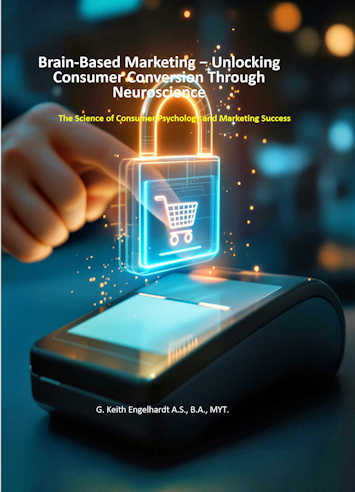
Brain-Based Marketing: Unlocking Consumer Conversion Through Neuroscience
In this book, Keith Engelhardt shares practical, effective, and easy to implement brain science-based marketing tips so that marketing, product, and experience design can more effectively capture and focus attention, determine preferences, and understand purchasing behavior. Their goals center on optimizing how businesses and brands communicate, design, and position offerings and achieve better marketing results.
ISBN: 979-8-90243-266-1 (223 pages)
Information about the book and purchasing the book is available at https://cms.sawatchsolutions.com/brain-based-marketing-unlocking-consumer-conversion-through-neuroscience/

© 2026 All rights reserved
Sawatch Solutions LLC
https://cms.sawatchsolutions.com/
 540x540.jpg)