

Imagine a young woman named Sofia. She grew up in a Mexican household in San Antonio, graduated from a Texas university, and now works in tech. On a Sunday morning, she's scrolling through her phone in a warm kitchen that smells like café de olla. By Monday afternoon, she's presenting a product roadmap in a glass-and-steel boardroom.
Sofia hasn't changed. But two distinct sets of cultural wiring are running in parallel inside her brain — and whichever one is active at a given moment will shape what she notices, what she trusts, and what she buys.
This is cultural code switching in action. And for marketers who understand it, it represents one of the most powerful and underused tools in the entire discipline.
Before diving into the strategy, let's define our terms. A schema is a mental framework — a shortcut the brain uses to process information quickly. When you see a stop sign, you don't re-learn what it means every time. Your brain has a stop-sign schema, and it fires automatically.

Cultural schemas work the same way. They are collections of deeply embedded associations, values, and emotional responses that were formed through years of lived cultural experience. When someone who grew up in a collectivist household (common in Latin, East Asian, and Middle Eastern cultures) sees an image of extended family gathered around a dinner table, a specific emotional response fires. When someone primed by an individualist cultural frame (common in mainstream U.S. and Western European marketing) sees the same image, a different set of associations activates — or none at all.¹
What makes bicultural and multicultural individuals so fascinating to neuromarketers is that they carry multiple schema libraries simultaneously. Research has shown that these individuals don't simply blend their cultural frameworks — they toggle between them, and external cues determine which one becomes dominant at any given moment.²
The brain research here is compelling. A landmark study by Lau-Gesk (2003) found that bicultural consumers respond differently to ads depending on which cultural frame has been recently activated — even when the ad itself doesn't reference culture at all.³ A Hispanic-American consumer exposed to a brief Spanish-language phrase before seeing a product ad showed measurably more favorable attitudes toward that product than when the same person saw the same ad without the cultural prime.
This happens because of how the brain processes identity. The prefrontal cortex manages our sense of self, and it is deeply intertwined with cultural memory. When a cultural cue — a song, a word, a visual symbol — activates a specific schema, it temporarily reorganizes which values and associations are most mentally "available."⁴
In practical terms: the same person can hold collectivist values and individualist values, but which ones are driving behavior depends heavily on what they have been recently exposed to. This is not a psychological quirk — it is how the brain manages the complexity of modern multicultural life.
Neuroimaging studies have added texture to this picture. Research using fMRI has shown that bilingual individuals activate different neural networks when processing emotional language in their first versus second language, suggesting that emotional responses — including those triggered by advertising — are partially language-dependent.⁵
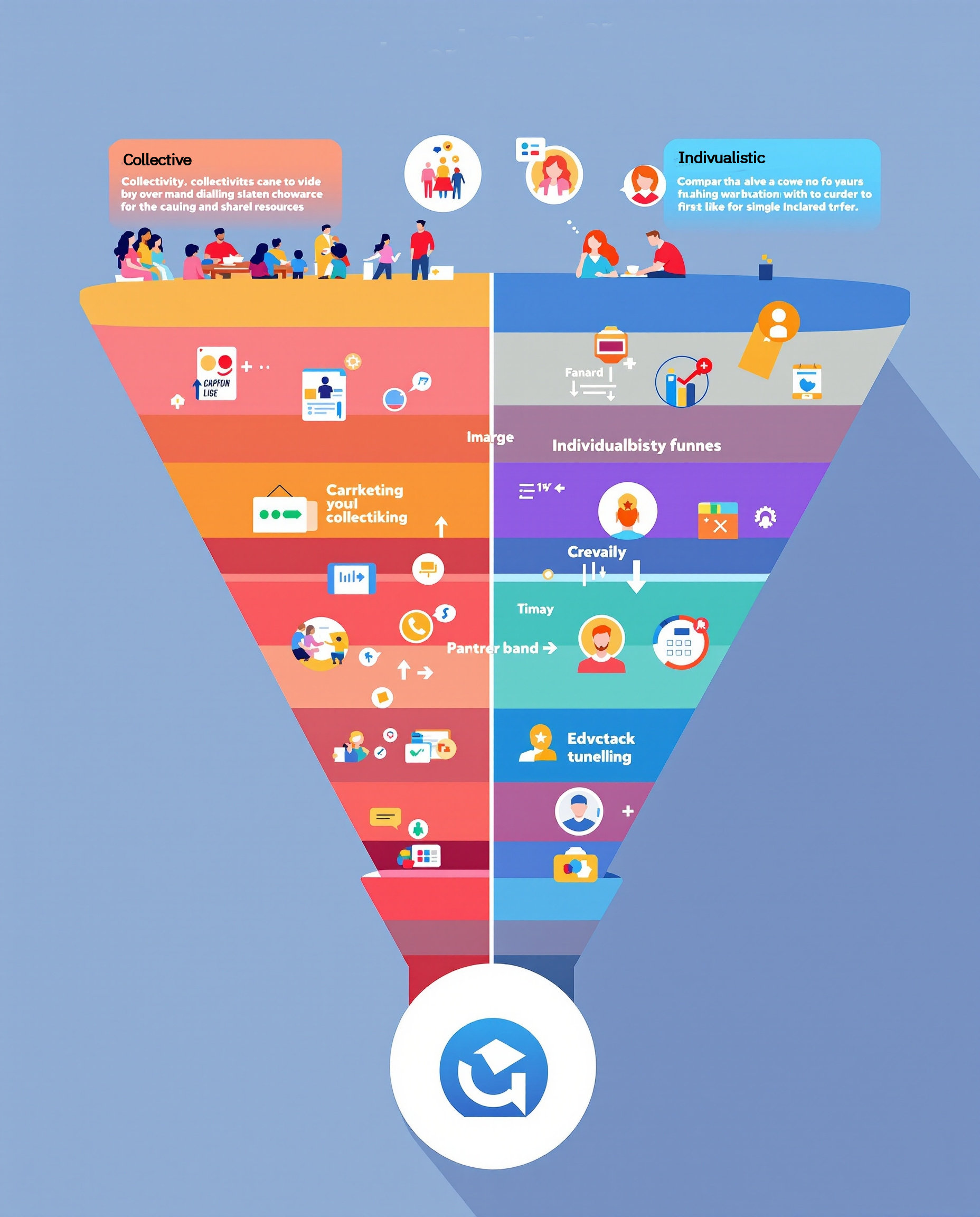
Here is where strategy becomes actionable. Cultural code switching as a marketing tool means designing your messaging to intentionally prime the cultural schema most likely to resonate with the emotional and decision-making state you want your audience in.
Step 1: Identify which schema serves your goal. Ask yourself: does your product deliver more powerfully when positioned around family and belonging (collectivist schema) or personal achievement and self-expression (individualist schema)? A home insurance product might land harder through a collectivist lens — "protect the people who depend on you." A fitness app might perform better through an individualist lens — “become the person you're capable of being.”
Step 2: Match the prime to the schema. Cultural primes don't have to be heavy-handed. In fact, subtlety is often more effective. Research by Hong et al. (2000) showed that simply showing an American flag versus a Chinese dragon before a task caused Chinese-American participants to shift from collectivist to individualist thinking — or vice versa.⁶ For marketers, this means that the language choice in a subject line, the imagery chosen for a thumbnail, or the opening visual in a video ad can all function as schema primes before the primary message is even delivered.
Step 3: Align your language and imagery throughout. The prime sets the frame; the rest of the message must honor it. If you activate a collectivist schema with a warm image of multigenerational family, and then your copy pivots immediately to personal achievement language, you create cognitive dissonance — and the consumer feels it, even if they can't articulate why the ad seems “off.”
Step 4: Test across cultural segments, not just demographics. One of the most common mistakes brands make is equating cultural segment with demographic category. A 35-year-old second-generation Korean-American and a 35-year-old first-generation Korean-American may share an ethnicity but will respond very differently to the same cultural prime, depending on their acculturation level — the degree to which they have adopted the values of their host culture.⁷
Cultural code-switching strategy is not without real risks.
The authenticity trap. Consumers — especially multicultural consumers — have finely tuned radar for inauthenticity. Research consistently shows that when cultural elements are used performatively (think: a brand suddenly pivoting to Spanish only during Hispanic Heritage Month), it generates backlash rather than resonance.⁸ Cultural schema activation works when it is honest; it backfires when it signals exploitation.
The stereotyping trap. Not every member of a cultural group has the same schema library. Cultural heritage is not monolithic. The goal of good cultural code switching strategy is not to play to stereotypes but to offer an access point — a cue that feels familiar and welcome to those for whom it resonates, without alienating those for whom it doesn't.
Over-segmentation fatigue. There is a practical ceiling. Creating dozens of distinct cultural variants of every message is expensive and can fracture brand identity. The solution is to focus on the highest-leverage switch points — typically the opening prime, the headline, and the primary image — and maintain consistency in the core brand proposition and visual identity beneath those adaptive elements.


Audit your existing audience for cultural diversity and acculturation levels. Go beyond ethnicity to understand the cultural values actually at play.
Conclusion: The Real Opportunity
Sofia is not a market segment. She is a complete person with a rich, layered identity — and she makes purchasing decisions inside a cultural context that shifts throughout her day. The brands that understand this, and design for it with both scientific rigor and genuine respect, will build the kind of deep emotional resonance that generic mass-market messaging simply cannot achieve.
Cultural code switching in marketing is not about manipulation. It is about meeting people in the cultural space they are actually occupying — and offering them something that genuinely fits.

The Neuromarketing Playbook Podcast https://mysoundwise.com/soundcasts/1770335640163s

NeuroMarket
Leap Ahead of the Competition with Science Based and AI Marketing tools!
https://bp.neuromarket.co/

Wishcraft.dev
Dream It. Build It. Launch It. Turn Your Vision into Digital Reality
https://wishcraft.dev/
Marketing Mastery Collection: 50 Cutting-Edge Strategic Insights
Avoid throwing darts and wasting marketing dollars, dive into science based cutting-edge strategies that blend psychological understanding and strategic thinking for compelling marketing narratives that drive meaningful engagement and measurable results. https://mmc.neuromarket.co

MindMarket Academy - The Science of Marketing and Selling, Simplified https://mindmarketacademy.com/
Lead Conversion Catalyst − Transform Your Email Strategy with AI-Powered Personalization!
https://leads.neuromarket.co/

AI Audio Alchemy − Simplify your podcast episode creation, audio book narration, or voice overs while lowering cost.
https://aaa.neuromarket.co

Avatar Alchemy − Simplify your podcast episode creation, audio book narration, or voice overs while lowering cost. https://aaa.neuromarket.co

© 2026 All rights reserved
Sawatch Solutions LLC
https://cms.sawatchsolutions.com/
 540x540.jpg)